Specialist Learning Disability: Psychological and Emotional Wellbeing
Introduction to wellbeing
- The term wellbeing can be used to refer to how a person feels, how they are coping with daily life and what feels possible for them right now. When wellbeing is low, people might find it harder to cope with daily life and feel less hopeful for the future.
- Children with Learning Disabilities are more likely to have physical, emotional and behavioural difficulties, all of which are communicating that their wellbeing and resilience is low & require additional support.
- We also know there is an impact on the family for both parents and siblings, and its important to consider the overall family wellbeing.
Who we are
We work alongside our colleagues within the service as a multi-disciplinary team consisting of:
- Clinical Psychologists (x3)
- Assistant Psychologists (x2)
- Specialist Learning Disability Nurse/Mental Health (x2)

Vicky, Clinical Psychologist

Jenny, Clinical Psychologist
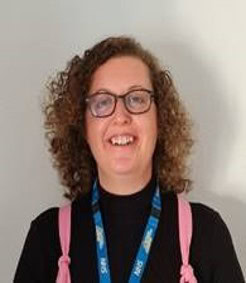
Jenna, Specialist Learning Disability Nurse/Mental Health
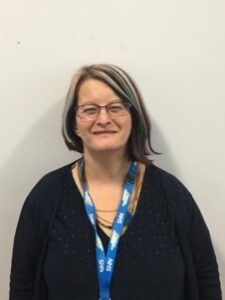
Paula, Principal Clinical Psychologist and Joint Clinical Lead for the Specialist Learning Disability Service

Megan, Assistant Psychologist
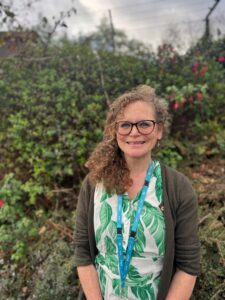
Danielle, Senior Community RGN/Paediatric Nurse for children with Learning Disability and Mental Health

Hannah, Assistant Psychologist
What we do
What is a cognitive assessment?
- A cognitive assessment involves a number of tasks, such as puzzles, remembering information, and answering questions. A number of items, including physical objects, visual and verbal information may be used within these tasks. These tasks help to assess your child’s cognitive ability (their ability to learn, understand information and problem solve), to help identify their strengths and what they might find difficult. This information can be used to help people understand your child better and to work out how best to support them. It can also be used to inform your child’s eligibility to access certain services.
- The type of assessment we may use with your child will depend on their age and how they communicate. If you would like more detailed information on the particular assessment that your child will receive, your clinician will be happy to provide this for you.
What will the assessment involve?
- Prior to assessment, we will invite you to an appointment to ask some questions about your child. This will include questions about their developmental, educational, family, and health history; particular areas of strengths and difficulties; and their likes and dislikes. To help us with this, we will ask you to bring along any reports you already have for your child.
- These could include reports from: Speech and Language Therapy; Occupational Therapy; Educational Psychology; Neurology Paediatrician
- Next, we will arrange the assessment appointment(s). This typically takes 1-2 sessions, depending on your child’s needs. Breaks can be taken between subtests and the assessment can be undertaken over several sessions if necessary. Ideally, all cognitive assessments are carried out with only the assessor and young person in the room, to minimise distractions. However, it is also important that the young person feels comfortable in order to encourage the best possible performance. As such, this will be discussed with you and the young person (if possible) before the assessment.
What happens next?
- After the assessment, we will arrange another session with you in order to feedback the results of the assessment, alongside recommendations stemming from our findings. You will also receive a report detailing the findings of the assessment and recommendations for the future. This will be added to your child’s medical record and shared with those supporting your child, such as their school. If appropriate, your child will also receive a report for them to keep. This will be in a format that is accessible for them.
Information for children and young people:
Seeing the Psychologist for a Cognitive Assessment – Easy Read
Easy read: what is a clinical psychologist
What is a clinical psychologist?
- Psychologists might try to help young people with their feelings
- They might find out what young people are good at and what they find difficult
- They might learn more about a young person
- They can help parents, carers and schools
- They might make a plan on how to make things better
What is a learning disability nurse?
- A Learning Disability Nurse is a qualified Nurse, who has additional specialist training, to work with people who have a learning disability.
- In the Specialist Learning Disability Service, Learning Disability Nurses, work with children, young people and their families.
- Learning Disability Nurses, will consider a child and young person’s mental and physical health. Mental health is about emotions, thoughts and feelings.
- The Specialist Learning Disability Nurse and Senior Nurse within their mental health role, will be thinking with the child, young person and their family about improving quality life experiences.
Easy read: what is a Specialist Learning Disability Nurse
What is an assistant psychologist?
- Assistant psychologists might try to help young people with their feelings
- Assistant psychologist might try to learn more about the young person
- They might try and find out what the young person is good at and what they need more help with
- they might help parents, carers and schools
- They might make a plan to help make things better
- Assistant psychologist will be supported by clinical psychologist
Emotional development for children with a Learning Disability is likely to be delayed and therefore they are likely to require a greater level of emotional support.
Here are some of the assessments we use within the team to support further understanding of this:
+ The Frankish Assessment of the Impact of Trauma in Intellectual Disability (FAIT)
The Frankish Assessment of the Impact of Trauma in Intellectual Disability (FAIT) determines the level of emotional development in individuals with an intellectual (or learning) disability.
It draws on our understanding of the core concepts of child development and development of attachment, and provides a behavioural observational assessment to identify the emotional stage of development.
This suggests that it will take a person with a Learning Disability a longer time to reach the point at which separation from care givers can occur with tolerable or manageable anxiety.
+ The Scale of Emotional Development – Short (SED-S)
The Scale of Emotional Development – Short (SED-S) is an assessment for individuals with a learning disability and can be used to assess delayed emotional development.
A questionnaire is completed by interviewing two people who know the person well and responses are based on their observations of the person’s behaviour over a specific time period.
Completing the SED-S can help in increasing understanding of how distress and associated behaviours can be linked to emotional needs and coping abilities.
Support and advice
If you are looking for additional advice, please take a look at our resources aimed at supporting, children, siblings, parents and professionals
Sometimes, you might feel sad, angry, worried or scared. That’s ok
Here are some ideas that might help you feel better:
- Name feelings resource: feelings board
- Coping skills/naming feels resource: wellbeing symbols
- Coping skills resource: Square breathing
- Coping skills resource: When I feel—— I might need...
- Coping skills activity- feelings bucket worksheet
+ Supporting emotional development
Being a sibling to someone with a Learning Disability is a unique experience. Siblings are often described as compassionate, accepting, and thoughtful children who play a big role in their families. Siblings often talk warmly of their brother or sister, and develop loving, joyful sibling relationships.
Being a sibling can also be tough. Siblings often face similar challenges to those encountered by their parents, but experience these challenges before they’ve developed the coping strategies and understanding they need to tackle them. This can make being a sibling feel tricky at times. Siblings sometimes need support to ensure that they feel informed, heard, connected, and valued as both individuals and as siblings.
#ItsaSiblingThing – the ups and downs – YouTube
SIBS
SIBS is a charity which offers information and advice for siblings who have a disabled brother or sister:
Information for parents
Supporting young siblings – Sibs
Information for young siblings
Information for adult siblings
Support for adult siblings – Sibs
Devon Young Carers
Devon Young Carers work with young people aged 4-18 who help look after someone in their family who is disabled.
Torbay Young Carers
Torbay Young Carers work with young people who look after a member of the family who is sick, disabled, has mental health problems, or has a drugs or alcohol problem.
Young Carers Service – Torbay Council
The following resources can be used by parents, carers or trusted adults to explore topics that might be relevant. Older siblings may also benefit from conversations that are led by them to explore their feelings and experiences without judgment.
Identity
Sometimes children that have a brother or sister with a learning disability get described in relation to their sibling, or take roles in the family to support the sibling. Just as the role ‘mum’ or ‘dad’ can become all consuming, so can the role ‘sister’ or ‘brother’. It can be helpful to support siblings of people with a learning disability to think about who they are, without it being in relation to anyone else. Working through these resources together can help your child learn about you, and you about them.
Experiences of Being a Sibling
Being the sibling of someone with a learning disability can mean that children have very different experiences to their friends who are siblings. It’s important for children to be able to share their experiences of being a parent. Try some of these exercises together to hear more about your child’s experiences of being a sibling.
EXPERIENCES OF BEING A SIBLING
Understanding Learning Disability
It can be difficult to understand what a learning disability is, and children may not understand and can sometimes make assumptions or come to conclusions that may not be accurate. The activities in this section will help you to understand what your child knows about learning disabilities and help you to explain a bit more about them in an age appropriate way. The first activity may be more suitable for younger children, and the final activity may be more suitable for older children. Your child can also learn about specific conditions on the SIBS website https://www.sibs.org.uk/info-and-advice/learn-about-conditions
UNDERSTANDING LEARNING DISABILITY
All About My Sibling
Siblings of children with a learning disability often have a different experience to their peers. School and friends might not understand what they experience. These activities can help siblings to start sharing with important people in their lives about their brother of sister with a learning disability.
Understanding and Coping with Feelings
Sometimes, it can be very difficult for us to make sense of big feelings like worry, anxiety, and stress. This is especially true for children. The exercises below will support you and your child to understand their feelings better, and to find ways to support them with those feelings
UNDERSTANDING AND COPING WITH FEELINGS
Strengths, Hopes, and Dreams
Siblings of people with a learning disability may not feel able to share their strengths, hopes or dreams for the future. It’s important to give them space to explore what they would like for the future and to think about what makes them amazing now! These activities are fun ways to start thinking about strengths, hopes, and dreams with your child.
We understand that being a parent/carer to a child with complex needs comes with demands that can make it much harder to meet your needs, and your wellbeing may be affected as a result. Therefore, we provide a space for parents/carers to discuss their needs and help identify strategies that facilitate personal wellbeing in the context of caring for a child with complex needs. We also support parents/carers with difficulties around acceptance of their situation and the grief that can be experienced when caring for a child with complex needs. When there are concerns we are not able to support with such as mental health difficulties, we will signpost you to appropriate services.
Please note we are not a mental health or emergency service. If you are over 18 and feel you are suffering with a mental health condition we recommend contacting your GP or referring to TALKWORKS for further support. You can call TALKWORKS on 0300 555 3344 or self-refer online at Self-refer to TALKWORKS. If you or someone else is experiencing a mental health crisis please contact the first response service (a 24/7 urgent mental health helpline) on 111.
Additional resources:
- Wellbeing – Mind easy read version: tips-to-improve-your-wellbeing-2020-easy-read.pdf
- Your health and wellbeing | Carers UK
- Parents & Carers Support – Learning Disability | Mencap
- Impact of caring on families – Challenging Behaviour Foundation
- Parent Guides – Cerebra (all of the guides on here are useful for parents but this one looks specifically at wellbeing: Looking after your own wellbeing as a parent/carer of a child with a brain condition – Cerebra)
Resources for parents / carers:
Resources for those working with children and young people:
Recommended books:
- The Whole Brain Child: 12 Proven strategies to nurture your child’s developing mind (2012) Dr. Tina Payne Bryson and Dr Daniel Siegal. Publisher, Robinson.
- Day by day: Emotional wellbeing in parents of disabled children. (2021) Joanna Griffin. Publisher, Free association books.