Helping to prevent pressure ulcers
Information for patients, parents and carers
What is a pressure ulcer?
A pressure ulcer is an area of damaged skin caused by pressure.
- Pressure ulcers can happen by sitting or lying in one position for too long without moving. Or from any medical devices that press on the skin.
- If there is pressure to an area, blood cannot circulate causing a lack of oxygen and nutrition to the skin. If the pressure continues, then damage can occur very quickly.
- If the skin changes colour, feels hard, if a warm area develops and if there is a loss of feeling or pain in an area, this may be a sign that a pressure ulcer is developing.
- If your child doesn’t move, or is unable to move, there may develop changes to the skin such as a red or purple area which can become sore, patches that have become very hard, are soft \ wet or patches that are darker than they usually are.
Early signs of a pressure ulcer
Redness, discomfort, pain, blisters or areas that are cool or hot. Report any skin changes immediately to your carer or healthcare professional.
Where are pressure ulcers most likely to develop?
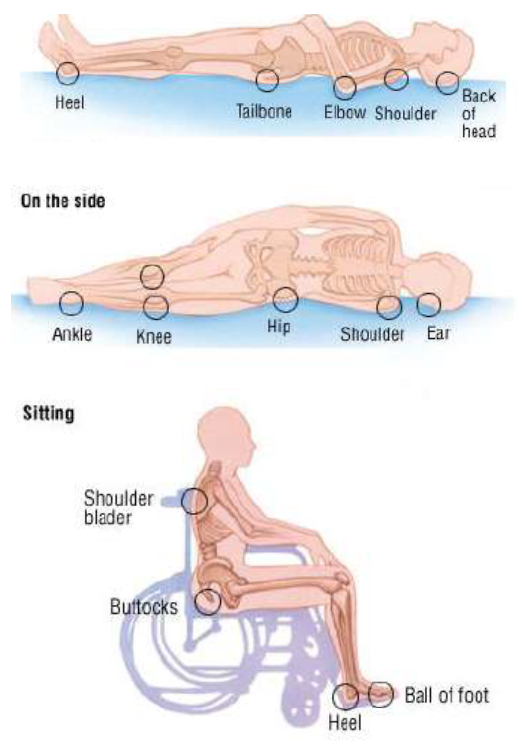
Usually on the parts of the body which take your weight and where the bone is close to the surface. They can take a long time to heal and are painful. Sometimes they get infected. It is much better to stop this from happening.
Some of the areas most at risk are shown below:
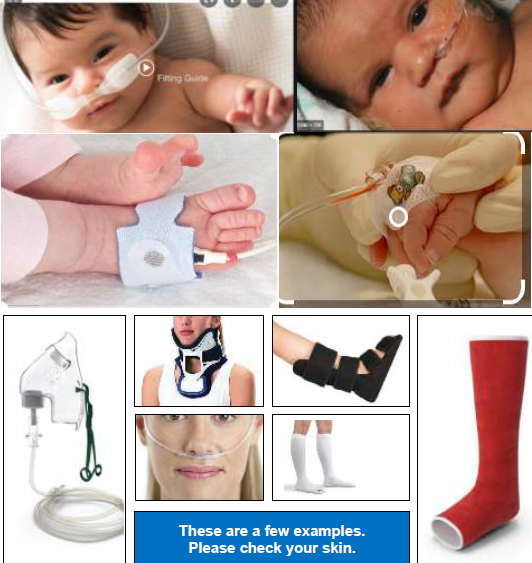
A risk assessment called a ‘Purpose T’ will be completed by your healthcare professional.
- Skin Inspection – Check your child’s skin often. Tell someone if it becomes sore or uncomfortable, particularly if this is on their heels or bottom. Do not rub skin as this can remove the top layer causing damage.
- Surface – If your child is assessed as being at risk of developing pressure ulcers you may be offered special equipment to prevent a pressure ulcer occurring. It is also very important that their chair is the right height and width, to prevent them sliding.
- Keep moving – This is very important, change position as much as possible. For example, if in bed try to roll onto alternate sides regularly. If they can walk around please ensure that footwear fits correctly to prevent skin damage.
- Incontinence – it is important to deal with any continence concerns as these can damage your child’s skin and make them more at risk of pressure ulcers. Use a barrier cream to protect skin and wash with a mild non-perfumed cleanser.
- Nutrition –plays a very important role in preventing pressure ulcers. Nutritional needs will be discussed with you and a plan made to ensure that your child is eating and drinking what they should.
It is important that you understand the information given to you, if you are unclear please speak to your health care professional or carer.
Advice or a written care plan from your healthcare professional might include:
- How to adjust your child’s sitting and lying position
- How often they need to move or be moved
- How to support their feet and elevate their heels
- Which equipment you should use and how to use it
This will be discussed at each review.
If you only have a one off visit you will be provided with the information you need, in the form of this leaflet and a discussion about how you can help your child to prevent pressure ulcers. It would be beneficial to share this leaflet with your family members or any care givers to raise awareness of how to prevent pressure ulcers occurring.
Your plan of care may include specialist equipment such as;
- Special bed and mattress – this would be filled with air or made of a special foam.
- Cushions – these would redistribute pressure while your child is sitting in a chair.
- Slide sheets – these will be used to help change your child’s position.
Your healthcare professional /carer may also use things to keep the pressure off your child’s heels to stop them from getting sore. This is referred to as offloading. It can be done with equipment such as specially designed boots or with pillows. These will be discussed with you and your child and you will be shown what to do with them.
Contact us
If you need any information, please contact: CFHD Single Point of Access (SPA):
Phone: 0330 0245 321
Email: CFHD.DevonSPA@nhs.net
This information has been adapted from a leaflet produced by the Cheshire and Merseyside Pressure Ulcer Steering Group and Alder Hey Children’s NHS Foundation Trust.
This information only gives general information. You must always discuss the individual treatment of your child with the appropriate member of staff. Do not rely on this information alone for information about your child’s treatment.